

Digital transformation for marina water and energy management

What the Marex.es delivery record supports
CoreLine designed and built the Marex.es (Harbor Commander) platform that connects Siemens PLC hardware at marina berths to a digital control and billing layer. The engagement has run since 2021 and covers design, frontend, backend, and system integration.
- 3 applications client, admin, and super admin
- The delivered scope is a boat-owner web app, a marina operator console, and an installation and maintenance tool.
- Siemens PLC hardware integration
- Sessions started in the app actuate the physical power and water supply points at each berth.
- NestJS + React with TypeScript and TypeORM
- The published architecture identifies the backend framework, ORM, and frontend stack.
Evidence basis: CoreLine's project delivery record and the technical scope documented in this public case study.
Scope note: Marex.es replaces a cash-desk and paper registration step with self-service activation. The time and error reductions that follow from removing that step are the intended design outcome; this page publishes no client-measured transaction times or error rates.
UX/UI DESIGN
WEB DEVELOPMENT
BACKEND DEVELOPMENT
SYSTEM INTEGRATION
USER TESTING
PRODUCT STRATEGY
Marex.es - also known as Harbor Commander - is a smart system designed to manage power and water supply for marinas and port authorities.
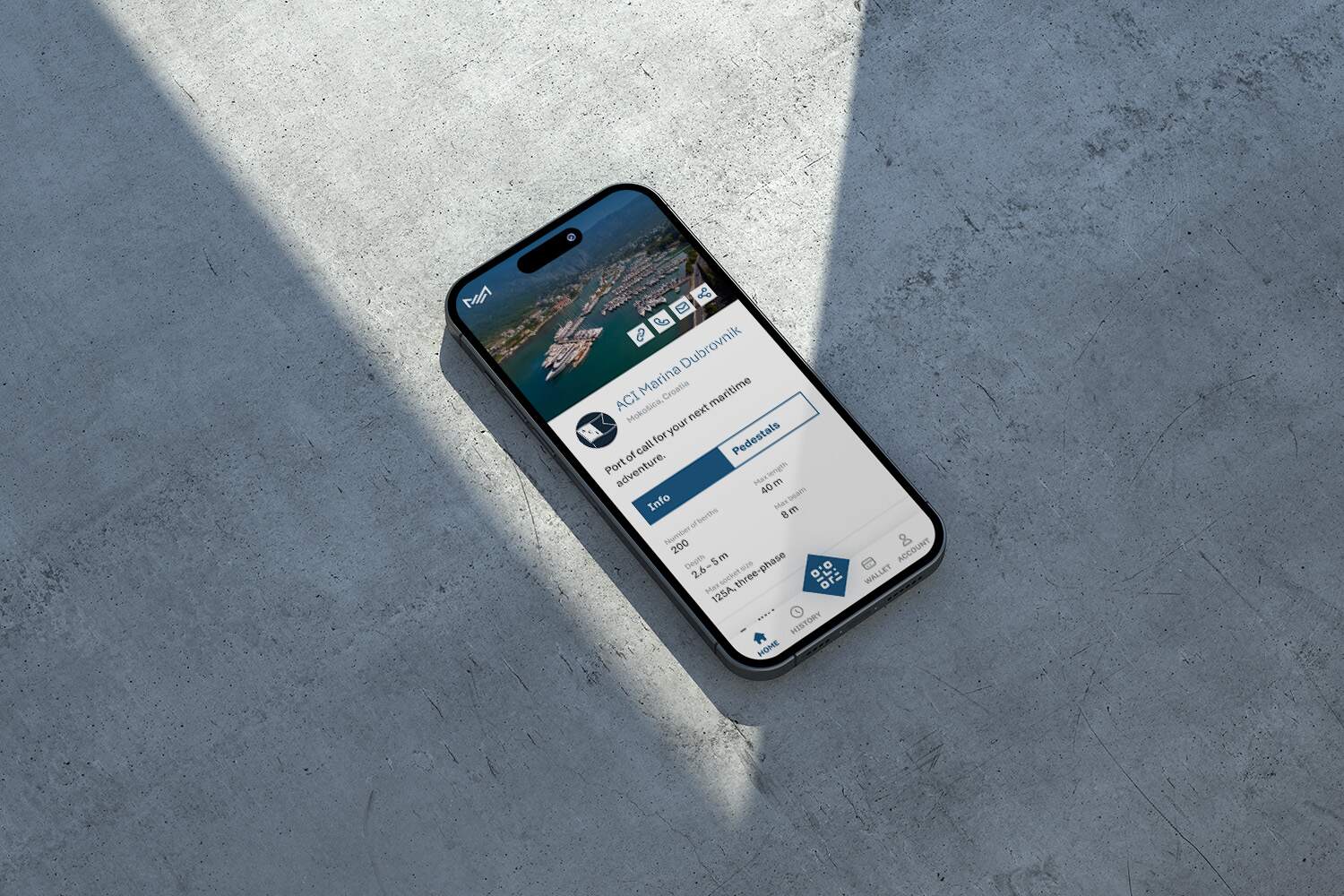
Streamlining marina operations through intelligent automation
Marinas across Europe face an ongoing challenge: managing individual access to power and water for hundreds of vessels, while ensuring accurate billing and operational efficiency.
Our task was to design and build a connected digital ecosystem that could interface with Siemens PLC hardware, allowing boat owners to control sessions remotely - and marina staff to oversee usage effortlessly.
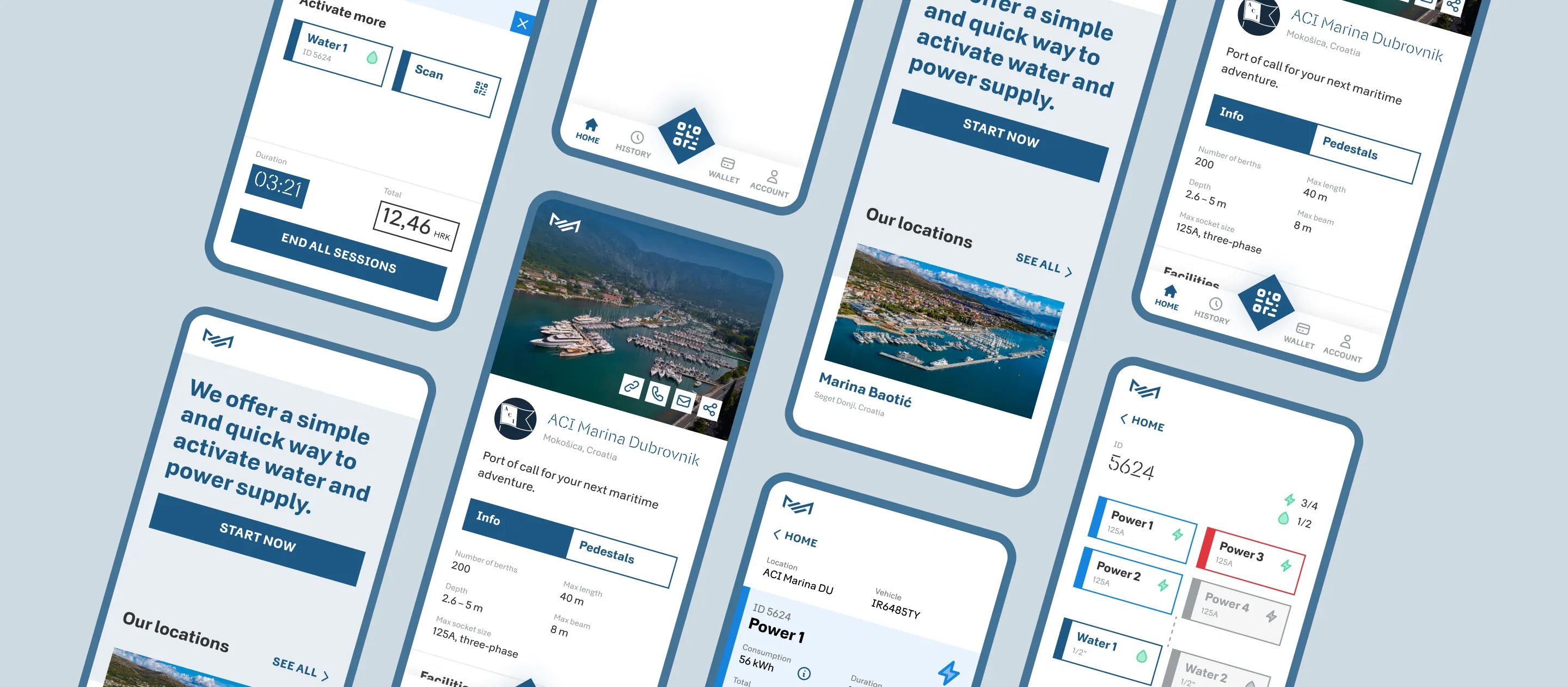
Connecting the physical with the digital
The client needed a complete, end-to-end solution that integrated physical devices - Siemens PLC machines - with a user-facing digital platform.
These PLC units control power and water access points for each berth, but until now, users had to visit marina offices and manually register or pay at cash desks.
The challenge was to build a web-based platform where users could:
- Activate or deactivate power and water sessions instantly.
- Track their consumption in real time.
- Choose from multiple payment methods (prepaid, postpaid, periodic).
In parallel, marina operators required an administrative interface for system monitoring, data analytics, and historical reporting - all synchronized with the PLC network.
Simplifying every step of the marina experience
Our vision was to create a frictionless digital experience for both boat owners and marina staff - reducing waiting times, manual registration, and administrative overhead.
The system needed to turn complex industrial automation into something accessible and intuitive, enabling users to control utilities directly from their mobile devices while ensuring secure, transparent billing.
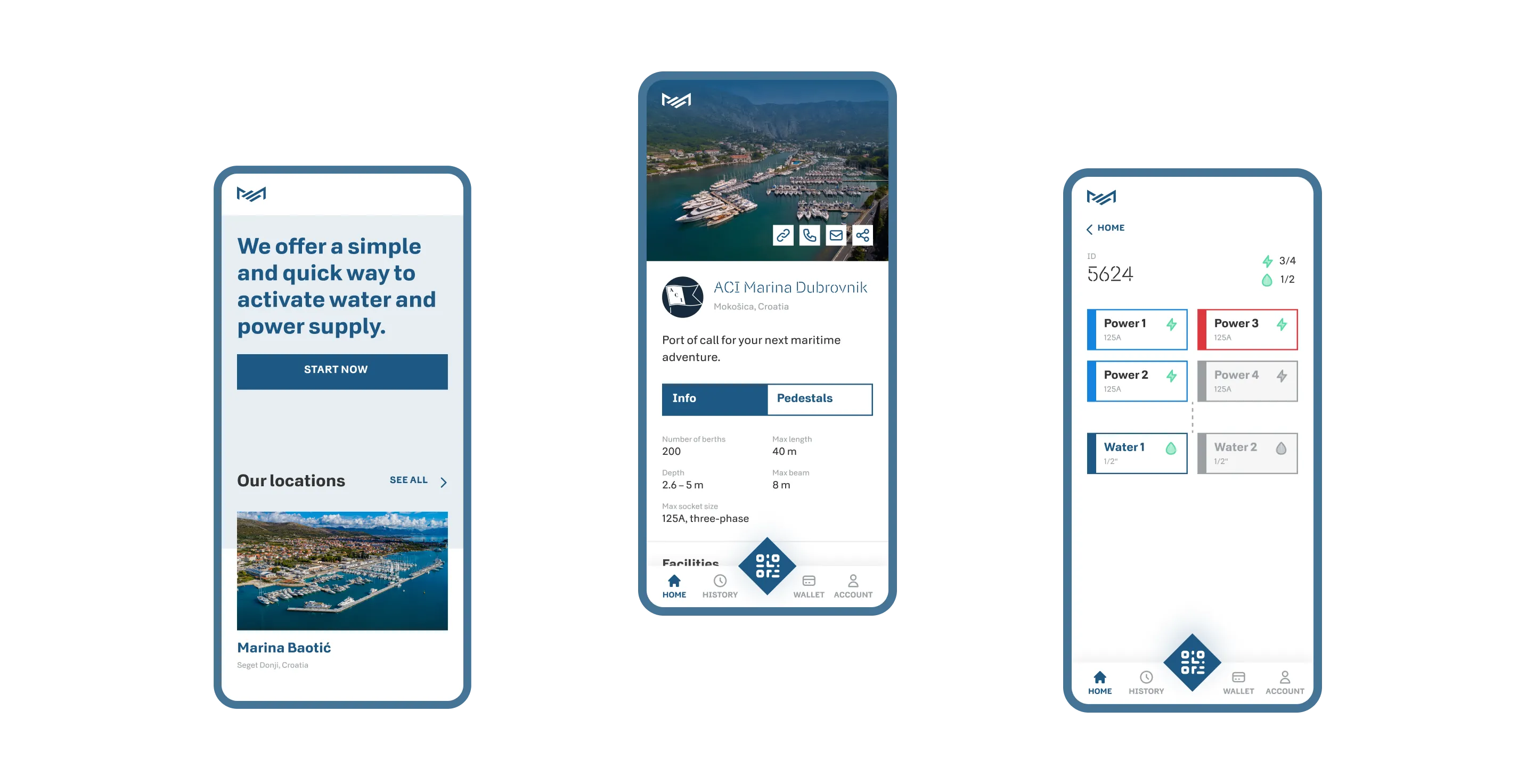
Turning complexity into clarity
We began development with a five-day Design Sprint, a structured process that allowed our team and stakeholders to collaboratively:
- Understand and define the problem.
- Sketch and prioritize potential solutions.
- Build an interactive prototype in Figma.
- Test and validate the concept with real users.
The design language focused on minimalism and clarity - a clean interface that lets users start, monitor, or end sessions with a few taps. Boat owners can view consumption data, check their connection status, and pay directly via mobile - no cash desk, no paperwork, no delays.
From prototype to fully integrated system
The platform architecture was designed to be modular and scalable, supporting multiple marinas and devices under one ecosystem.
Backend development utilized NestJS and TypeORM for reliable database management and API performance, while the frontend was built in React with TypeScript, ensuring smooth navigation and responsive performance across devices.
A connected system built for efficiency and control
The final product consists of three interconnected applications, each serving a distinct role within the ecosystem:
Client Web App Allows individual boat owners to control sessions, monitor usage, and make payments directly from their device.
Admin App Provides marina operators with full oversight - including live session tracking, remote control of supply points, and access to historical data.
Super Admin App Supports installation and maintenance teams with cabinet and PLC testing, ensuring reliable system performance.
Together, these components deliver a complete digital management solution that minimizes administrative workload, enhances transparency, and improves the overall marina experience.
A smarter, faster, and more sustainable marina ecosystem
Marex.es moves berth utilities from a staffed cash desk to self-service: a boat owner activates power or water from their phone, and the session actuates the PLC at the berth directly.
The delivered system provides:
- Integration between the Siemens PLC network and the digital control layer
- Self-service session start and stop, replacing manual registration at the marina office
- Prepaid, postpaid, and periodic payment options
- Live session tracking and historical consumption reporting for operators
The engagement has been running since 2021 and remains active. Marina operators are the ones who hold the transaction-time and billing-accuracy data; where this page describes efficiency, it describes the step the system removes, not a figure CoreLine has measured.