

Custom Software for Insurance Companies
Connect quoting, policy servicing and agent workflows around the way your team works.
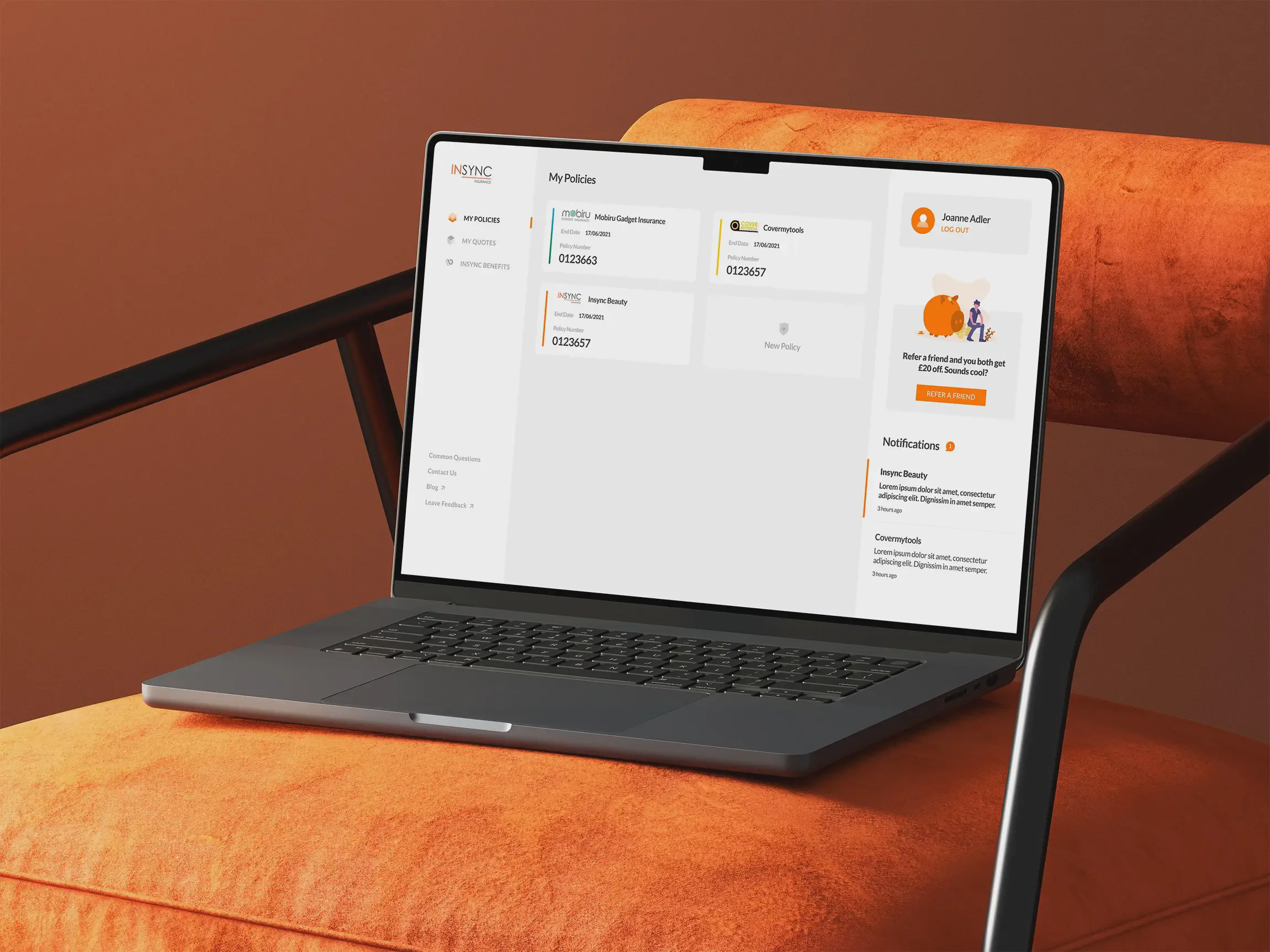
CoreLine designs and develops insurance applications, portals and integrations. Our published Insync delivery covers quotation flows, policy documents, customer self-service and agent operations. We start by defining one workflow and its system boundaries.
- Published Insync delivery and attributed client review.
- An agreed first scope, with validation and continuity requirements defined before migration.
5.0/5 from 20 Clutch reviewsRating displayed by Clutch when checked on 21 November 2026.
Quoting and servicing
Quotation journeys
Policy documents and updates
Integration with agreed data sources
Agent and customer portals
Agent operations
Customer self-service
Access and workflow permissions
Platform improvement
Architecture assessment
Incremental migration planning
Testing and operational handover
Sound familiar?
Your quoting system was built on spreadsheets and macros - it works until it doesn't, and compliance can't audit it
Off-the-shelf insurance platforms force you into their workflow, but your products don't fit standard templates
You need to integrate with Lloyd's, bordereaux, or third-party data providers and your current system can't
Your broker portal is a liability - slow, unreliable, and driving intermediaries to competitors
Which insurance workflow needs to change?
Describe the problem and the systems involved. We will review the fit and agree the scope of a useful next step.
- Start with the workflow and the decision you need to make.
- Keep confidential documents and production credentials out of the message.
- Any paid assessment, implementation and support scope is agreed in writing.
Start with one insurance workflow
A fit conversation identifies the problem. A written assessment scope defines what we will review and what decision it should support.
- Bring the workflow
Describe the people, systems, data and exceptions involved. Agree a safe way to share any representative records.
- Receive a decision record
Map the delivery boundary, integration assumptions, validation cases and first milestone.
- Choose how to proceed
Improve the existing platform, configure a suitable product, scope a build or resolve prerequisites first.

Agree the operational and regulatory requirements with your accountable team. Translate them into reviewable software controls and acceptance criteria. The software work does not itself constitute regulatory approval.
Identify users, business rules, data sources, permissions and exceptions. Confirm the integrations and the parts of the process included in the first scope.
Develop an agreed end-to-end journey, compare results with approved cases and document how exceptions reach the responsible person.
Agree cutover, data reconciliation, monitoring and recovery requirements before release. Some changes need a maintenance window or a different recovery plan.
What the published Insync work supports
Using solutions such as React Native, Flutter, AWS, and many others makes it possible for us to upgrade your product as much as possible and to achieve a thriving collaboration. Here you will find our guide through our most used technologies and case studies related to each one.

AWS offers the tools to build powerful, flexible, and scalable applications, from compute and storage to databases and content delivery.


Simply put, Flutter is Google’s cross-platform framework that lets you build mobile, web, desktop, and embedded apps, all from a single codebase.

React Native is Facebook’s cross-platform framework that combines the best of React with native platform features - perfect for new projects or enhancing existing ones.
Other technologies we use


Frequently asked questions
The published Insync case describes connected quotation, policy-document, agent and customer workflows. We confirm a named third-party integration and the relevant delivery evidence before including it in a new proposal. We do not assume every platform or market has the same integration requirements.
Your accountable compliance and legal teams define the applicable obligations. We agree software requirements such as permissions, records, retention and review controls, then include the relevant evidence in acceptance. Software delivery is not a guarantee of regulatory approval.
We assess continuity requirements, architecture and data migration before recommending a transition. Parallel operation can help where feasible. Some changes need a maintenance window or a separate recovery procedure; uninterrupted operation is not an unconditional promise.
A separately scoped assessment can map one workflow, its integrations and risks, and propose a first release. Scope, deliverables, fee and schedule are agreed before paid work starts. Implementation is a separate commitment.
Repository access, source-code and IP terms, infrastructure responsibilities, handover and any support arrangement are documented in the engagement agreement. Review the working-with-CoreLine guide for the decisions to cover.